JESSICA JANE JULIUS
ARTIST | EDUCATOR | COLLABORATOR
Edible Installations: A Madeleine Moment
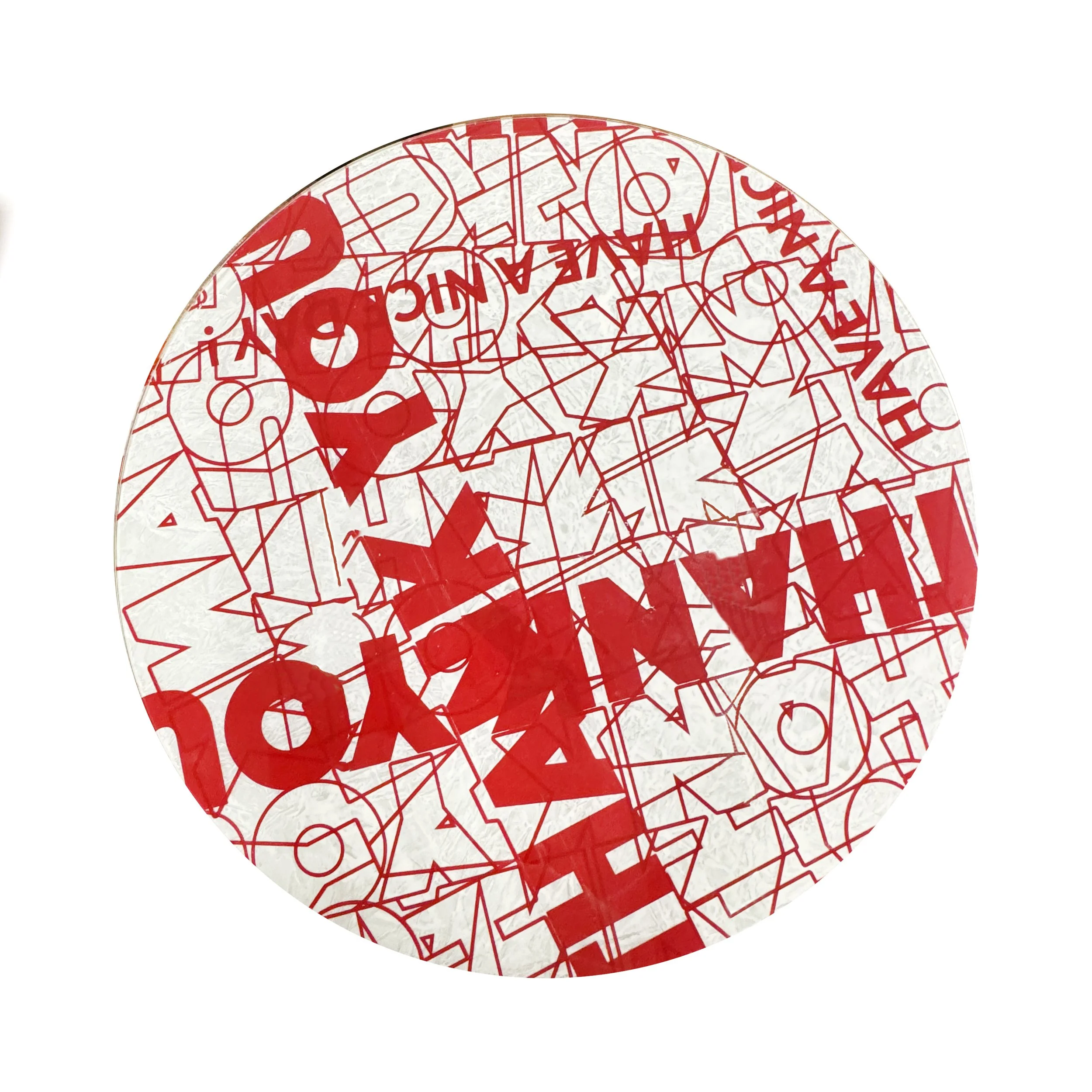
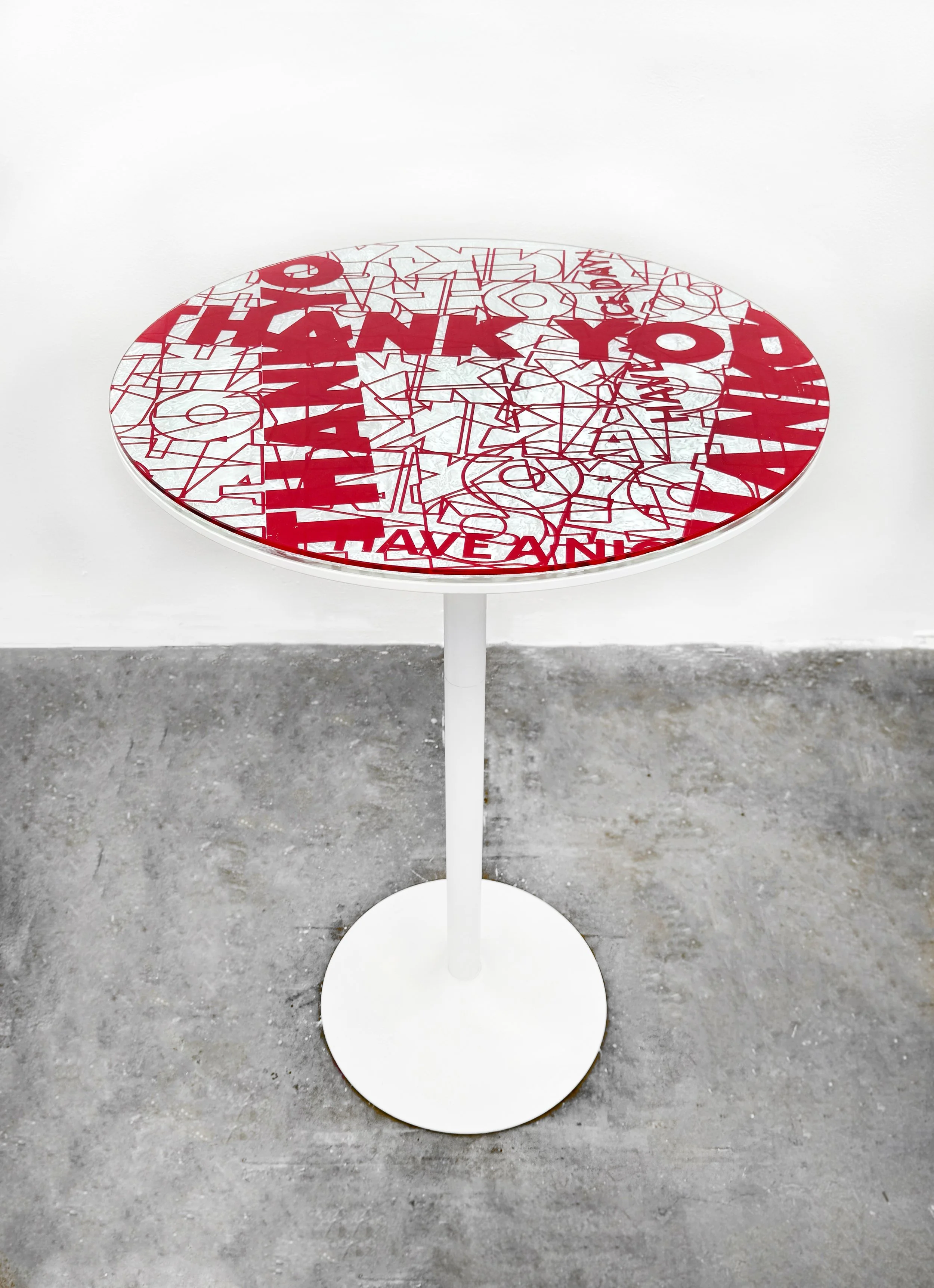
THANK YOU, Have a nice day!
Jessica Jane Julius, Erica Rosenfeld
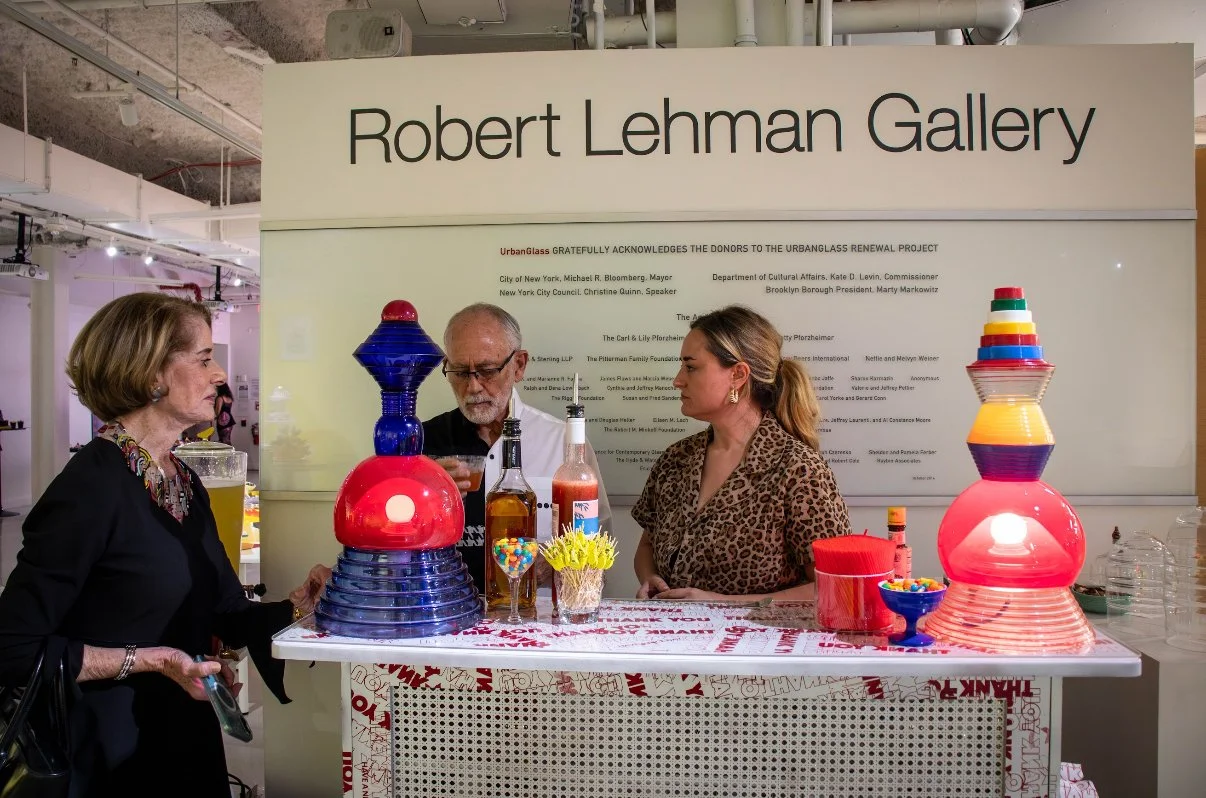
Jessica Julius’s new series of cocktail tables and bar works reimagines the iconic “Thank You” bag as both language and material form, tracing its shift from a gesture of gratitude and care to a hollowed signifier of consumerism. Through appropriation and recontextualization in glass, the work lingers on this slippage—how phrases meant to express connection become emptied, mass-produced, and endlessly circulated—inviting viewers to reconsider the weight of words within systems of exchange and desire. Featuring Erica Rosenfeld’s Atomic age light and Play Spire Light constructed from found glass and fabricated parts.
Special thanks to Amber Cowan, Doug Heller, Olivia Smith, Jessalyn Mailoa, and Tyler School of Art and Architecture
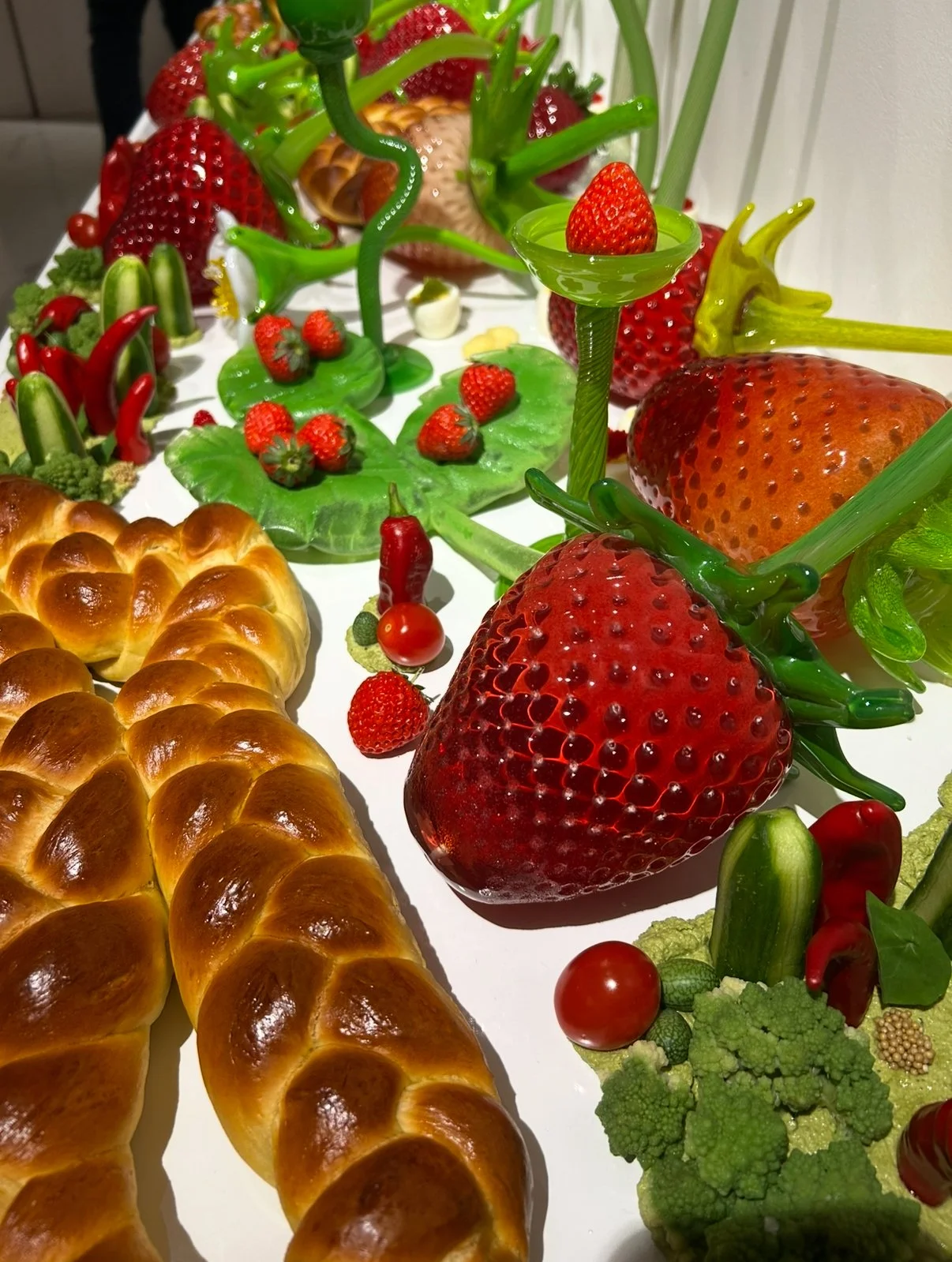
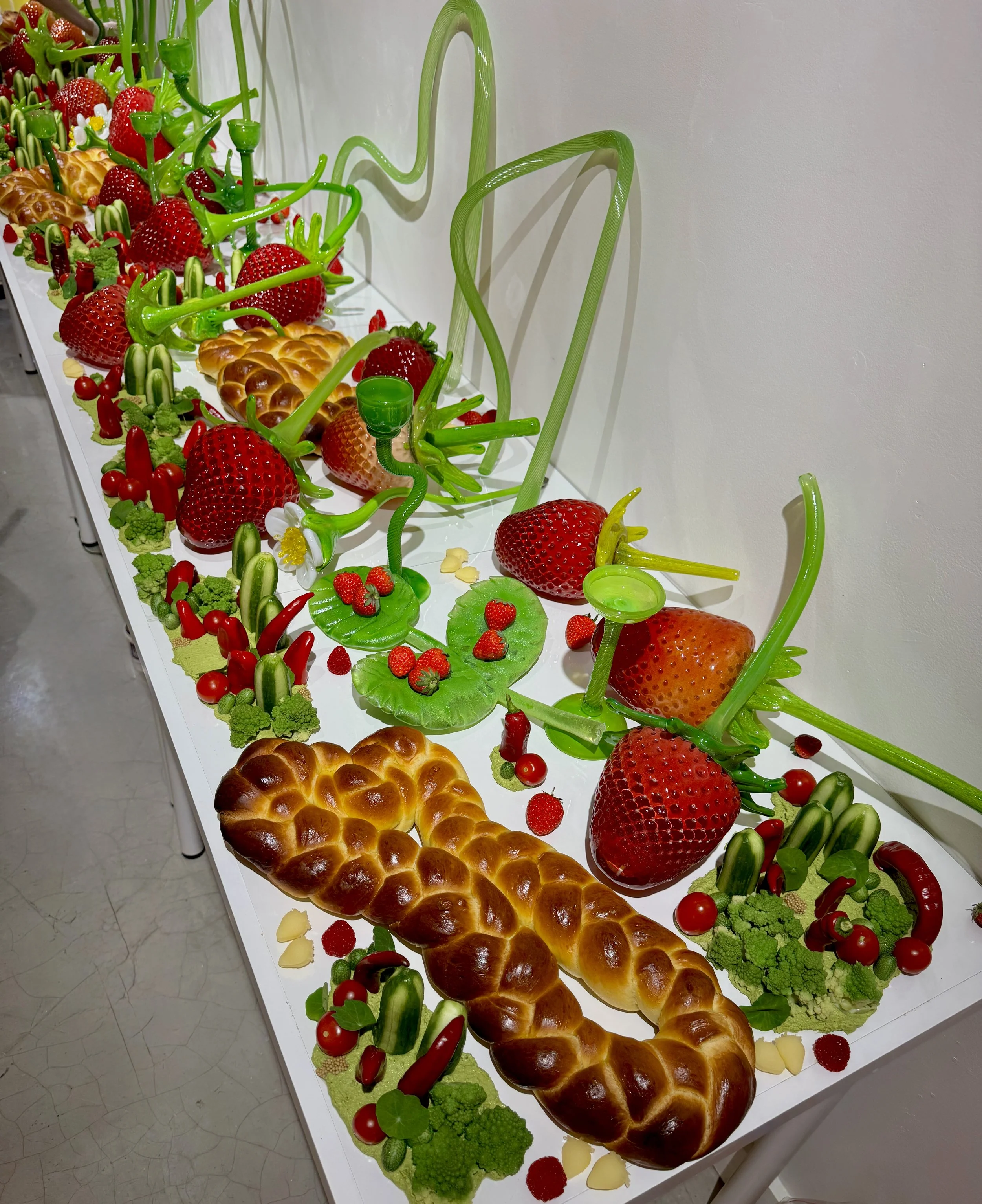
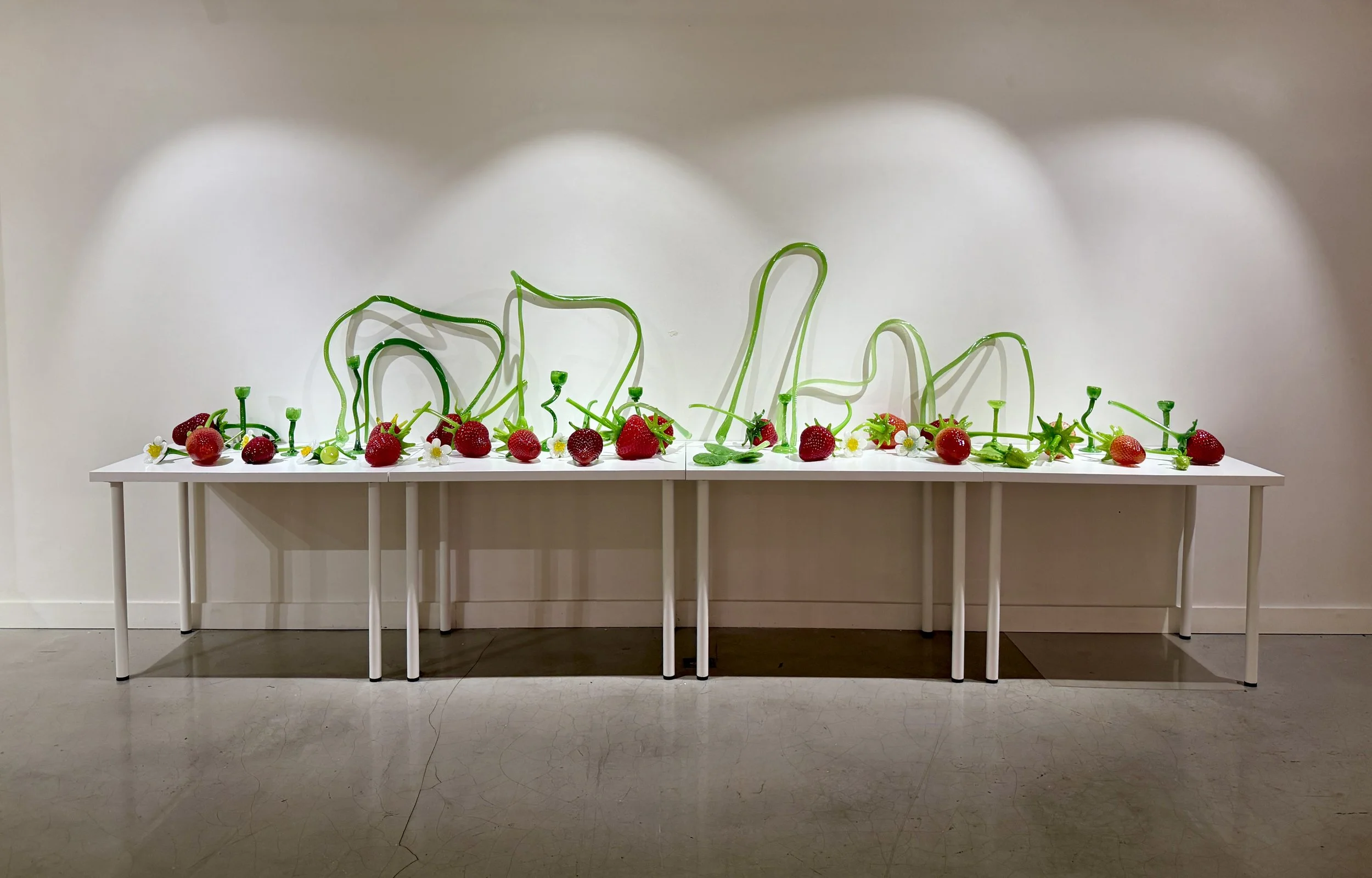
Strawberry Field
Deborah Czeresko, Jen Monroe
Blown Glass, Crudité garden, Bread snakes, Edamame hummus, Roasted red pepper dip, Market veg, Butter strawberries, Koyo strawberries, Deviled eggs with tobiko roe
This collaborative work merges sculpture and culinary experience through the shared language of form, gesture, and sensory pleasure. Czeresko’s blown glass strawberries embody a fierce sense of joy and lusciousness. Their delicious vitality expands into unruly fields that affirm pleasure, beauty, and nourishment, exemplifying the strength of joyous resilience and possibility. Monroe’s ephemeral contribution is inspired by foods that are heavily imbued with symbolism, like eggs and strawberries, and play with multiple layers of trompe l’oeuil.
Special Thanks to the Toledo Museum of Art during a 2025 GAPP residency, Tyler School of Art and Architecture, Jessalyn Mailoa Suspendisse nec congue purus. Vestibulum ante ipsum primis in faucibus orci luctus et ultrices posuere cubilia Curae.
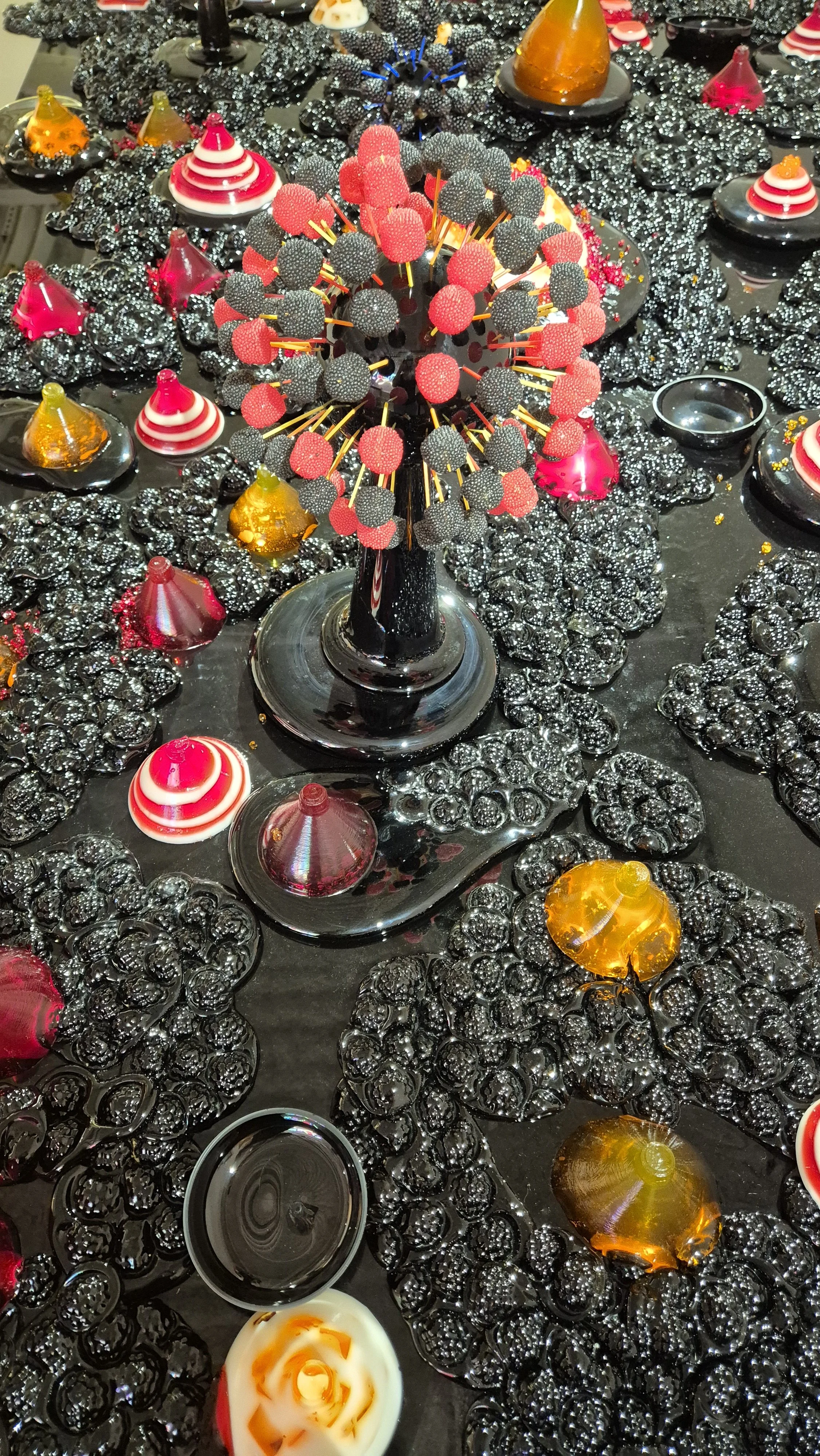
Blackberry Jello Bar
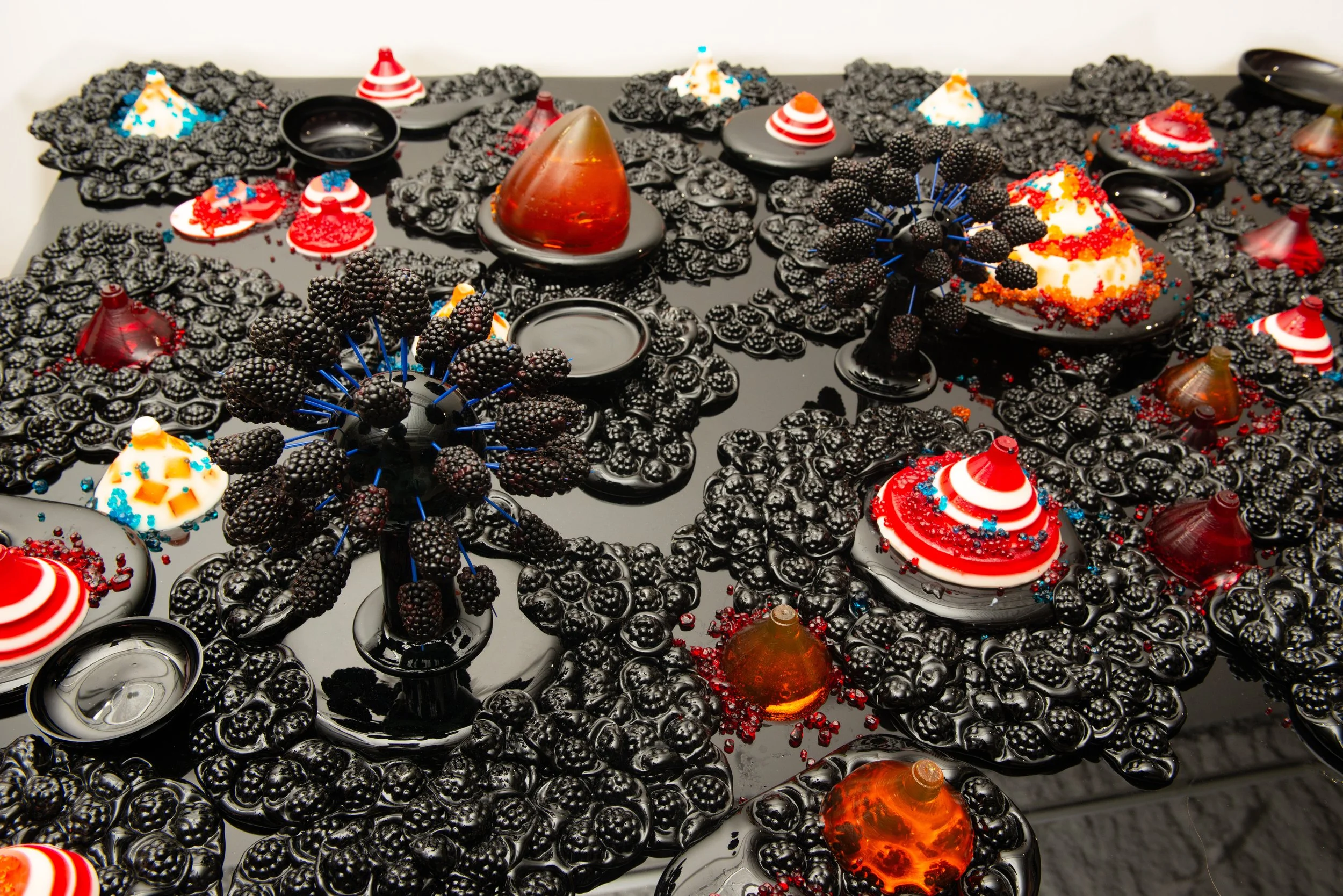
Jessica Jane Julius, Paige Morris, Emma Salamon
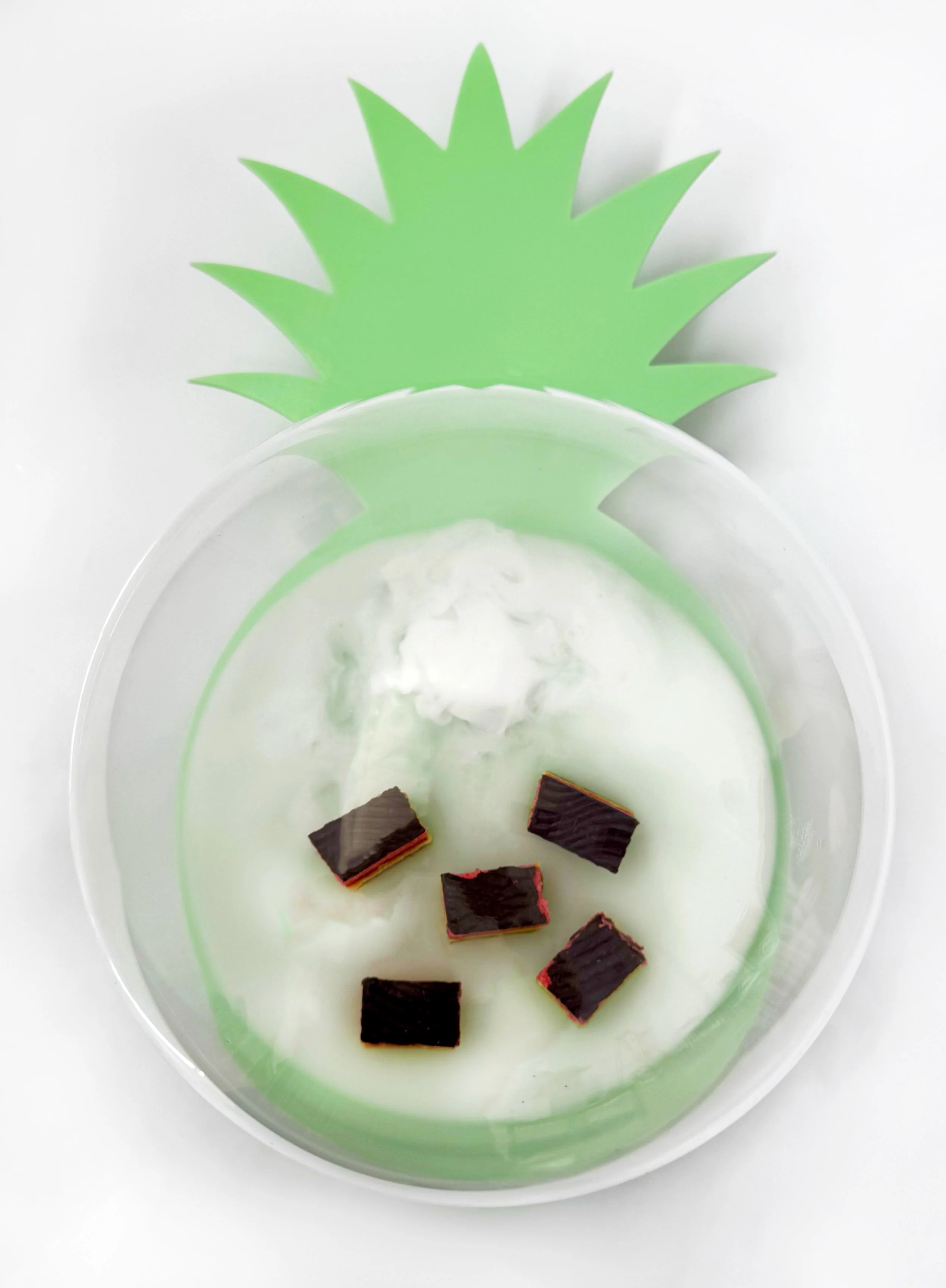
Black hot and kiln worked glass, blown glass, Jello Castings
A black glass blackberry topography with Jell-O sculptures- some infused as Jell-O shots present a vibrating and shimmering installation. Throughout the evening the sculpture is cut, served, and consumed inviting a playful interaction to sweetness.
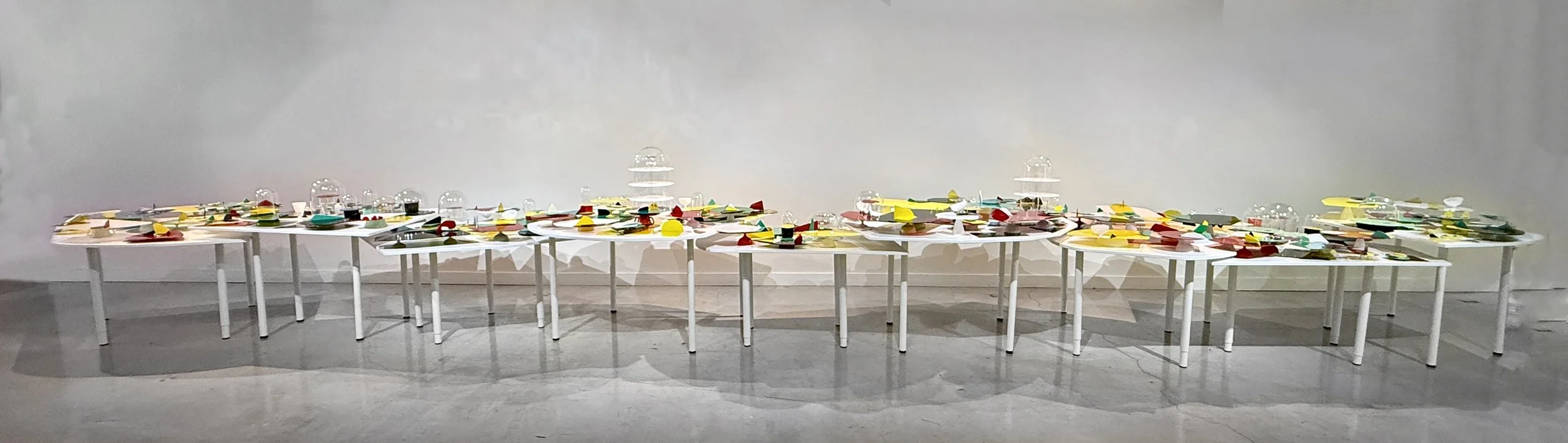
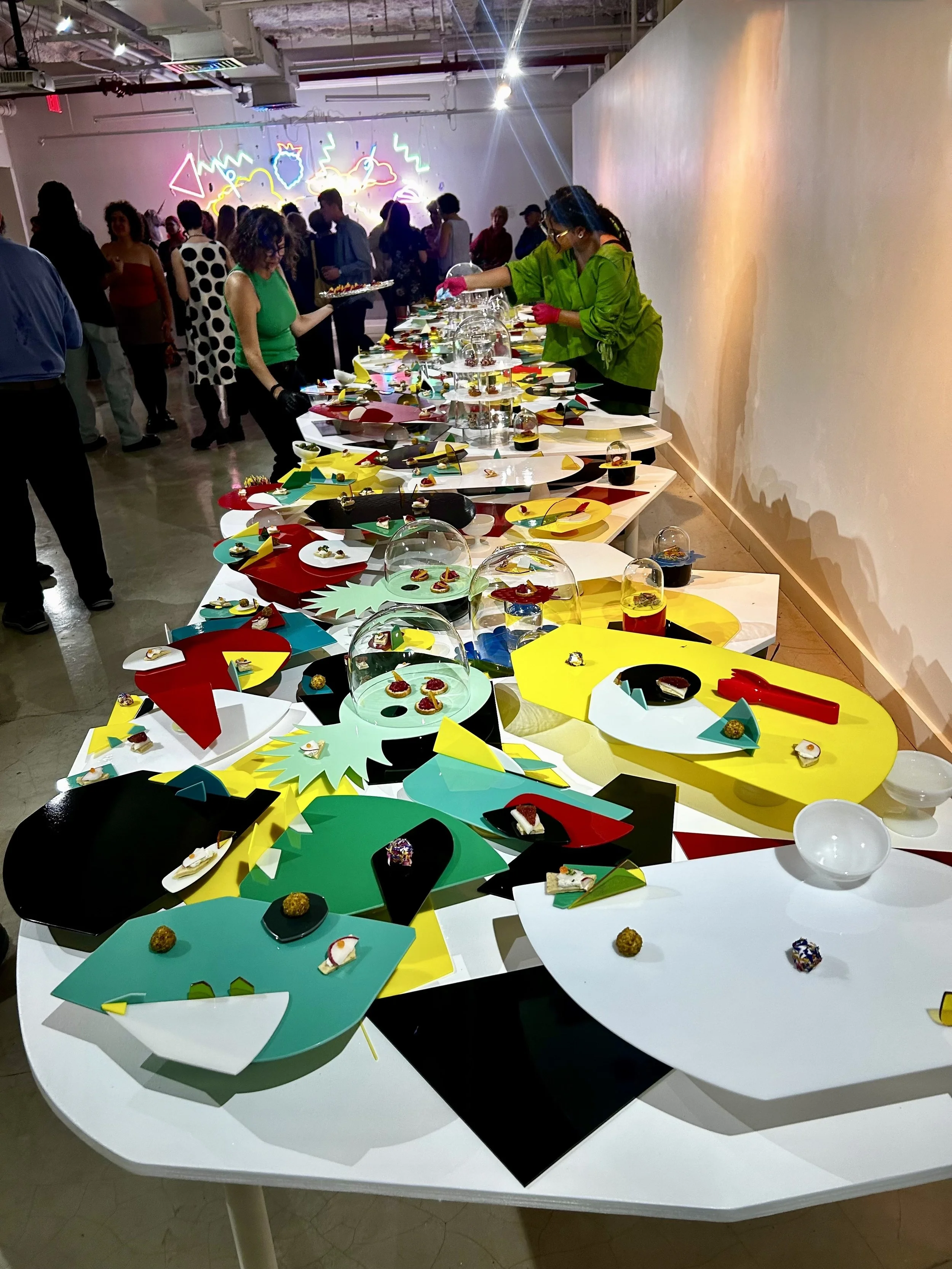
Atomic Age Tablescape
Jessica Jane Julius, Erica Rosenfeld, Dena Pengas
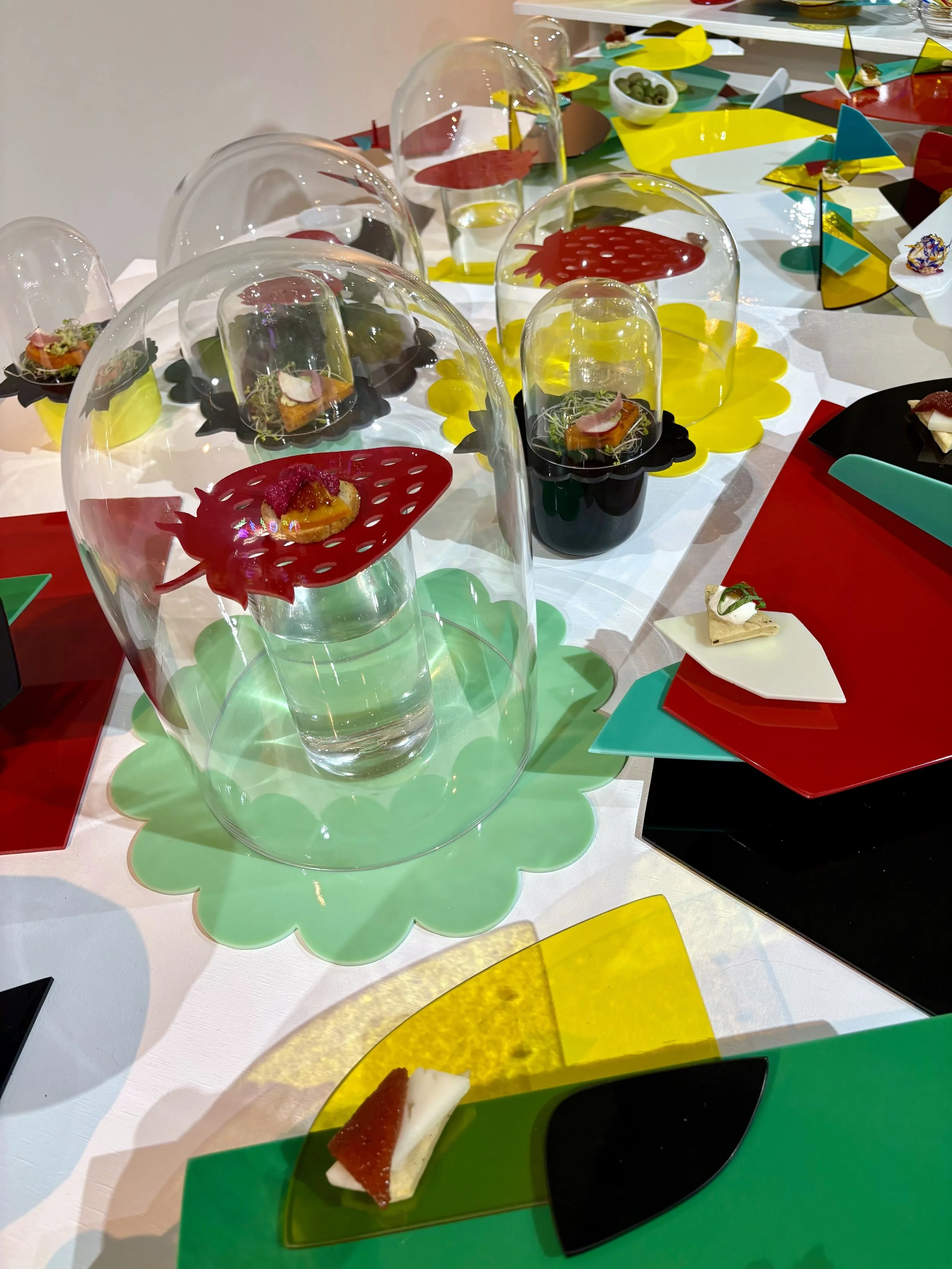
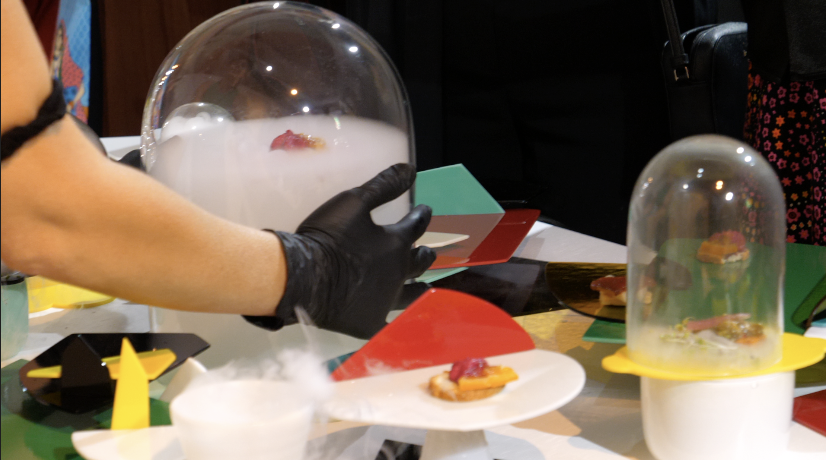
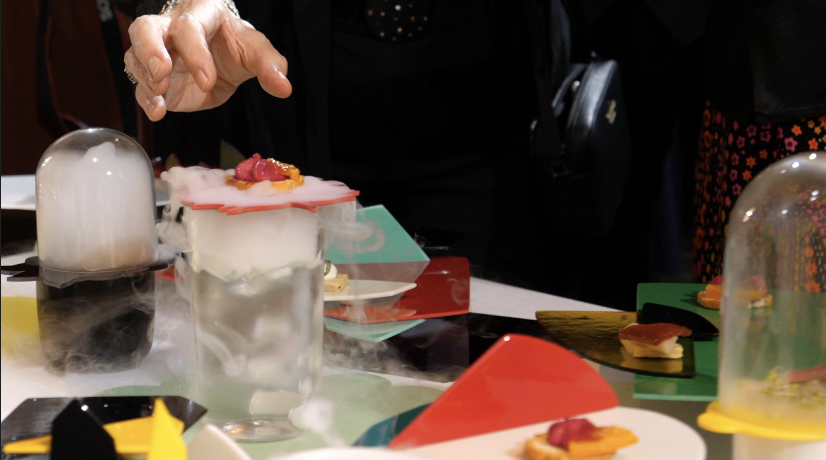
Hand-cut and ground sheet glass, waterjet-cut sheet glass, blown glass, found glass, dry ice, goat cheese, ricotta cheese, feta cheese, pistachio, quince, edible flowers, rosemary, thyme, basil, lime, radish, sweet potato, avocado, beet, pickled onion, candied orange, salmon roe, homemade crackers, crostini, and smoked trout.
Spanning 40 feet, this tablescape transforms the serving table into a shifting topography of color, opacity, and appetite. Hand-cut and ground sheet glass turned into mid-century modern design inspired sculptures present an array of patterned small bites, paired with “coolers”—glass domes concealing fruit shaped platters and dry ice—punctuate the landscape with swirling, ephemeral clouds, and hidden food. During the activation event, performers lift each dome in a choreography of revelation and offering, releasing plumes of smoke as food is served. Hidden dishes and surprise moments of interaction fold visual spectacle into sensory delight, blurring the boundaries between object, performance, and shared ritual.
Special thanks to Charles Jarboe, Jessalyn Mailoa, Molly Burke, Mike Jess, and Tyler School of Art and Architecture
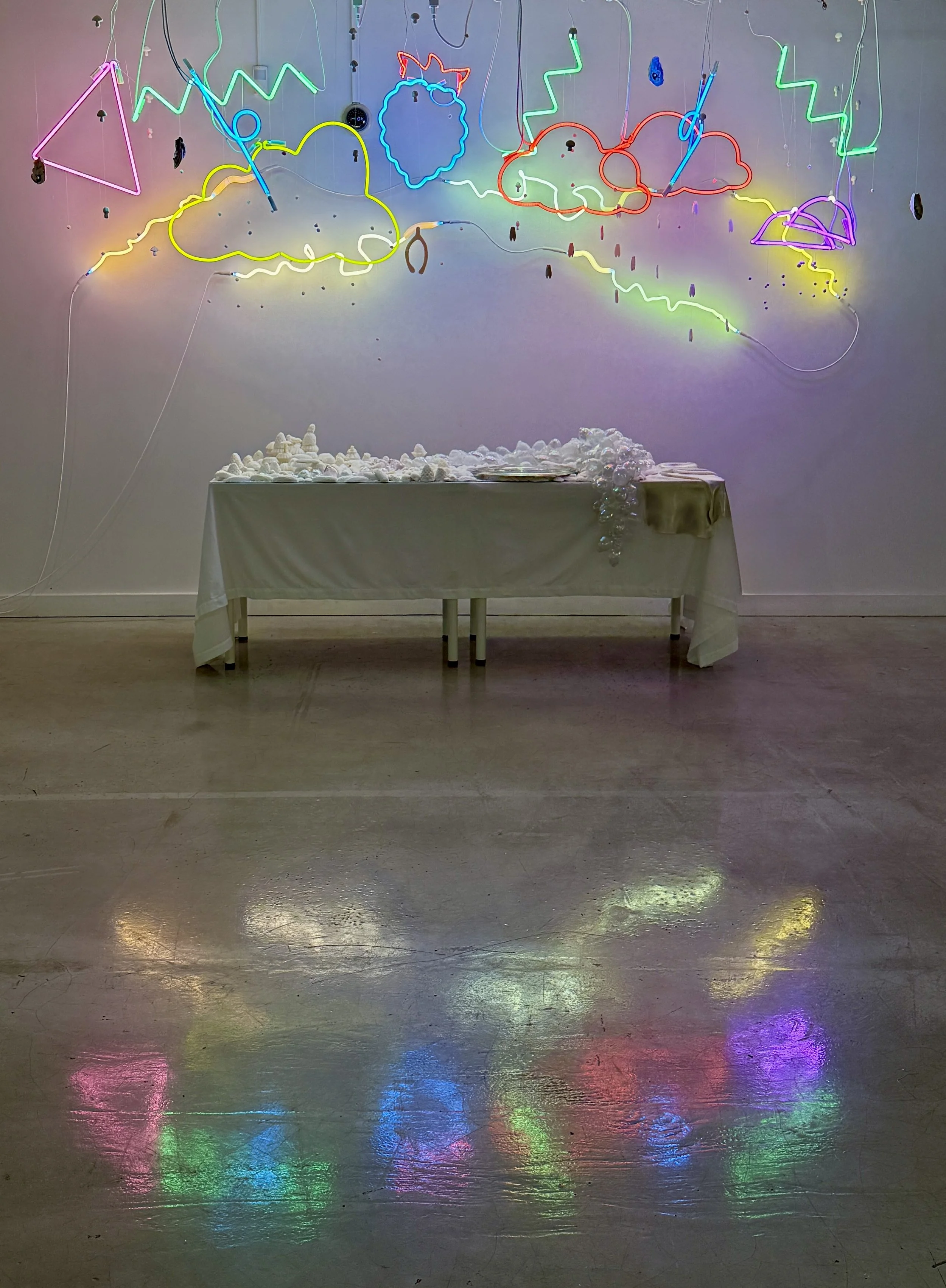
Neon Dyed Still-Life
Deborah Czeresko, Jessica Jane Julius, Erica Rosenfeld, Jen Monroe, Paige Morris, Dena Pengas, Erica Rosenfeld, Alison Siegel
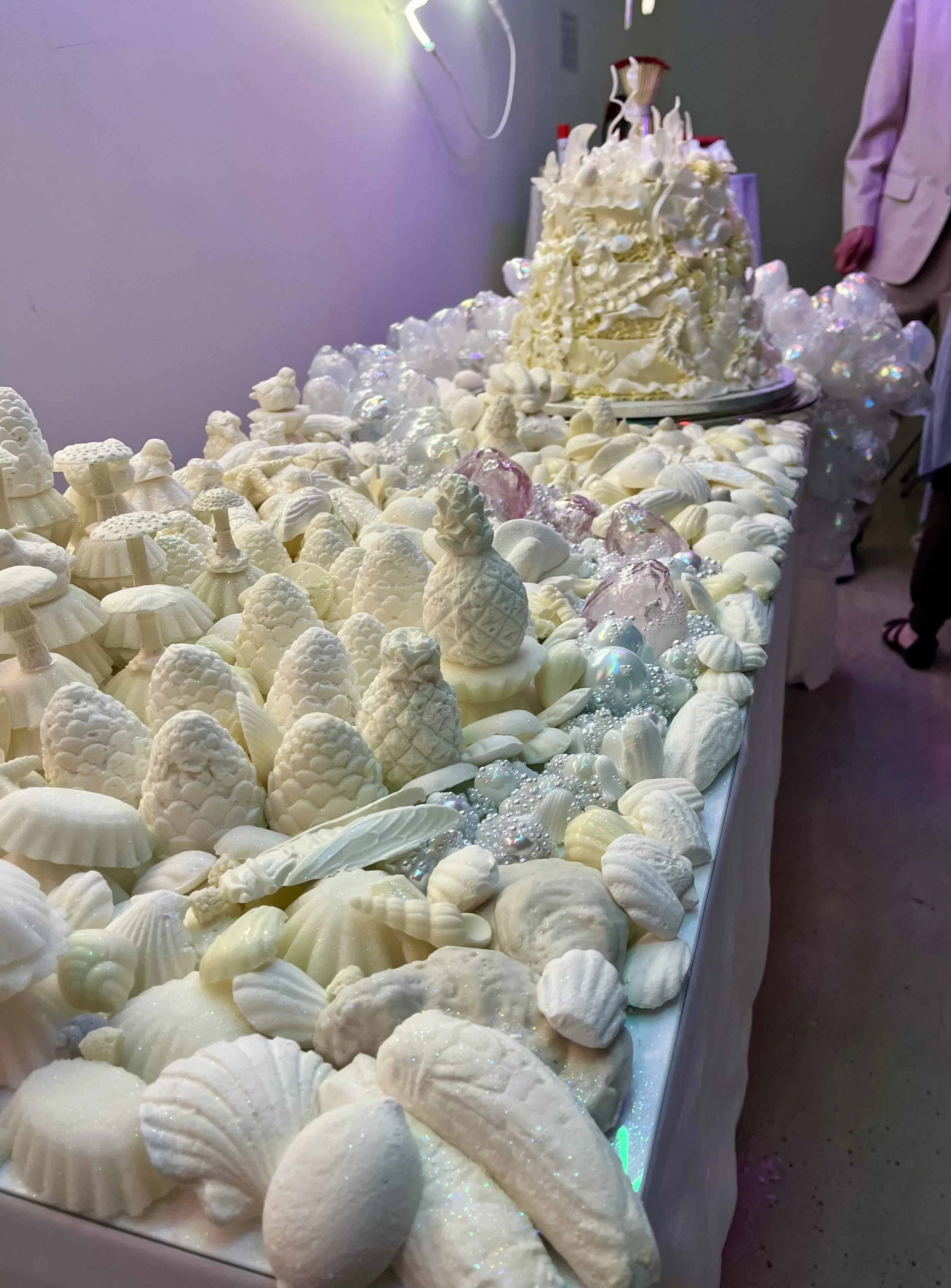
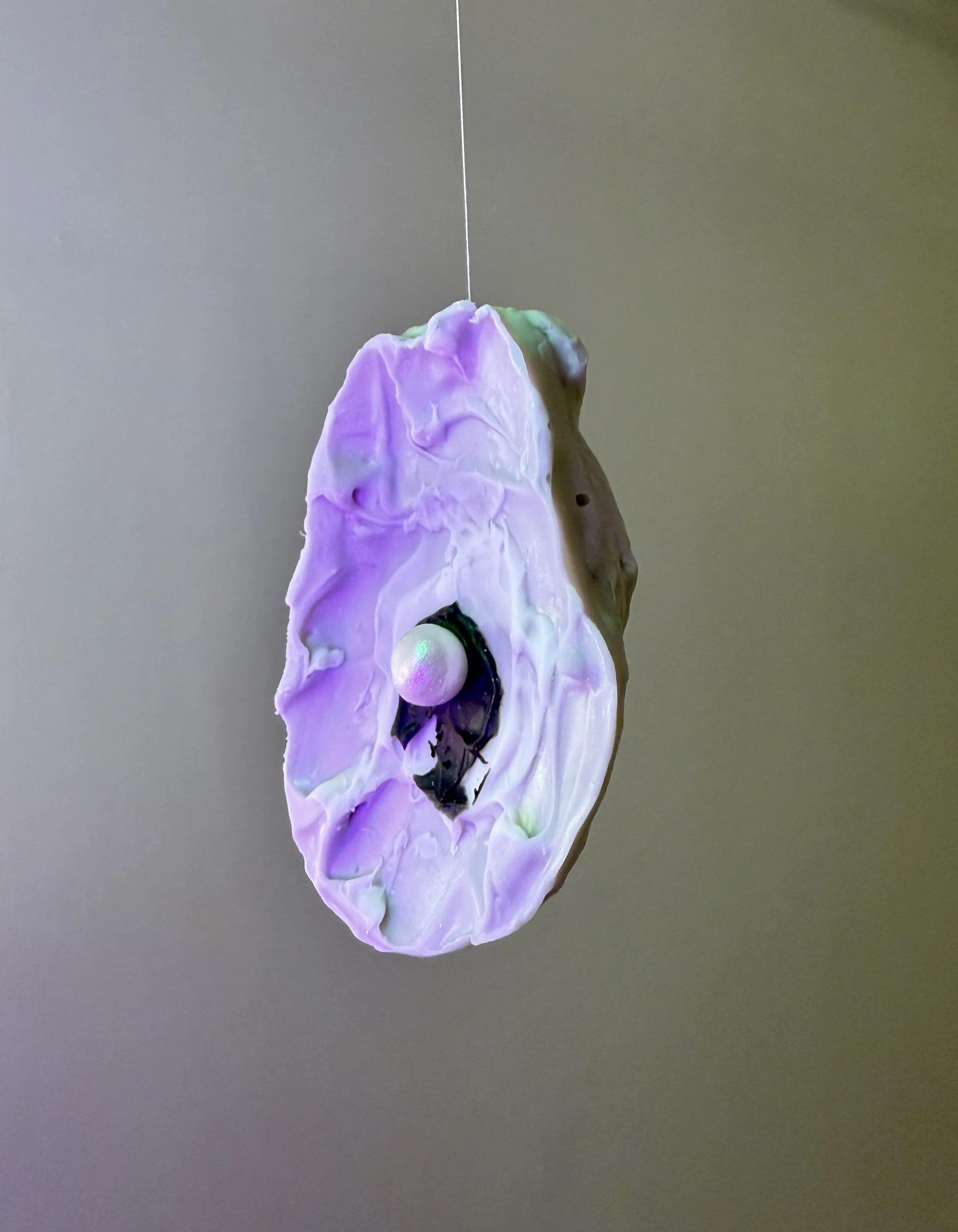
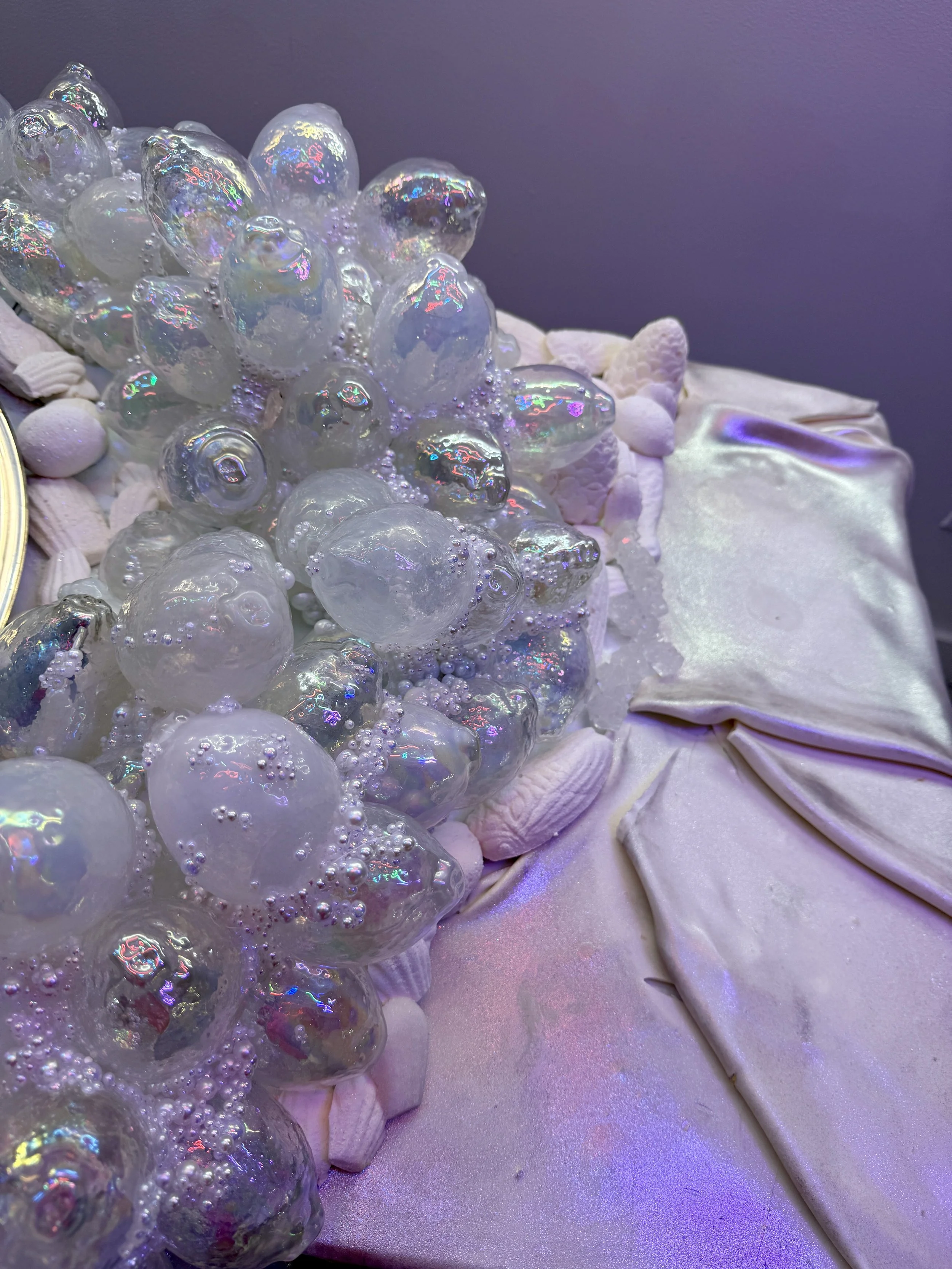
Lemon posset, homemade marshmallow, chocolate, and sugar castings, Earl Grey Sponge Cake with passion Fruit olive oil curd and condensed milk buttercream and pulled sugar, mirrored blown glass, imitation pearls, shells, marbles
Drawing from the historical tradition of decadent still life and the phenomenological resonance of the madeleine moment, this collaborative installation engages consumption as both literal act and conceptual framework blurring the boundaries between spectacle and sustenance. By inviting the audience to participate in the dissolution of the work through eating, the piece collapses boundaries between subject and object, desire and recollection, materiality and ephemerality. What remains is not the artifact itself, but the embodied memory- situated in taste, tactility, and the temporality of shared experience.
Special thanks to Charles Jarboe, James Akers, Ali Feeney for neon fabrication and to Tyler School of Art and Architecture for studio support and to Andrew Mahaffie